Apple Inc (AAPL) vs Microsoft Corporation (MSFT): Which Is the Better Buy in 2026?
Apple and Microsoft are fighting for dominance in the AI era. We break down the financials, risks, and growth catalysts for both tech giants.
The matchup
Apple and Microsoft represent the two pillars of modern technology, yet their paths to AI-driven growth differ fundamentally. Apple relies on its massive installed base of 2.5 billion active devices to drive a hardware-software ecosystem play.
Microsoft focuses on deep enterprise entrenchment through Azure and the Microsoft 365 suite. The competition centers on whether hardware-led AI integration or cloud-based enterprise software will capture more value in the coming fiscal years.
- Apple revenue grew 17% YoY in Q2 FY26, driven by high-margin services.
- Microsoft revenue grew 18% YoY in Q3 FY26, supported by cloud reacceleration.
- Apple maintains a 49% gross margin, while Microsoft faces pressure from $190 billion in AI infrastructure spending.
Numbers side by side
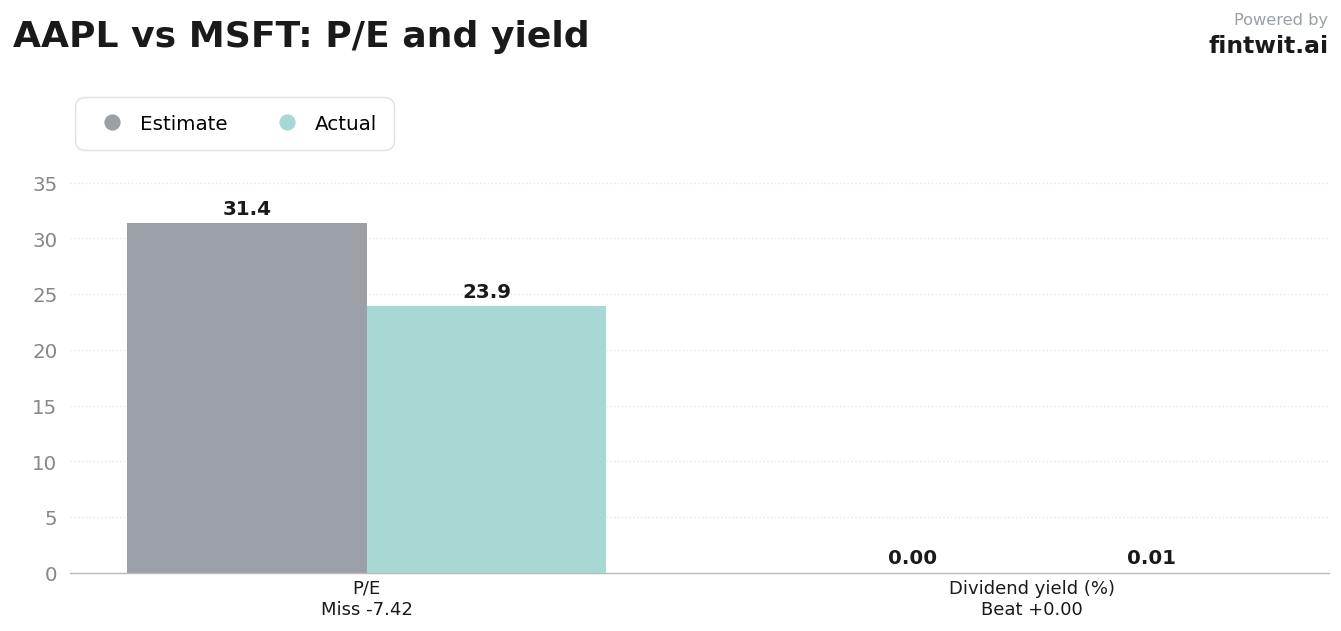
Valuation metrics highlight the distinct market sentiment toward each company's capital allocation strategy. Apple trades at a P/E of 31.35, reflecting investor confidence in its services segment and share buyback programs.
Microsoft trades at a P/E of 23.93, a lower multiple that accounts for the massive capital expenditure required to build out its AI infrastructure. The following comparison illustrates the divergence in their current financial health.
- AAPL Market Cap: $3.64 trillion; MSFT Market Cap: $2.84 trillion.
- AAPL P/E Ratio: 31.35; MSFT P/E Ratio: 23.93.
- AAPL Dividend Yield: 0.41%; MSFT Dividend Yield: 0.89%.
- AAPL 1-Year Return: 49.33%; MSFT 1-Year Return: -23.49%.
- AAPL 90-Day Return: 21.65%; MSFT 90-Day Return: 0.19%.
Bull and bear on each
Analysts remain divided on how AI will impact the bottom line for both firms. The bull case for Apple rests on a potential iPhone 17 supercycle, while Microsoft bulls point to the monetization of Copilot within the enterprise stack.
Bearish sentiment for Apple focuses on regulatory antitrust scrutiny and potential consumer indifference to AI features. For Microsoft, the primary risk is a 'spending hangover' from its $190 billion infrastructure investment.
- AAPL Bull: iPhone 17 supercycle and high-margin services expansion.
- AAPL Bear: Regulatory antitrust pressure and hardware commoditization risks.
- MSFT Bull: Azure cloud growth reacceleration and enterprise AI stack dominance.
- MSFT Bear: Massive capex spending pressuring free cash flow and execution risk.
- Analyst Take: Tigress Financial sees MSFT at $680, while 24/7 Wall St. targets AAPL at $350.49.
The verdict
The choice between these two giants depends on your tolerance for infrastructure-driven margin compression versus hardware-dependent growth cycles. Microsoft offers a more direct path to enterprise AI revenue, whereas Apple offers a more stable, consumer-facing ecosystem.
Investors should weigh the long-term potential of Azure against the recurring revenue stability of Apple's services. Both companies remain essential holdings, but their AI strategies will dictate performance over the next 24 months.