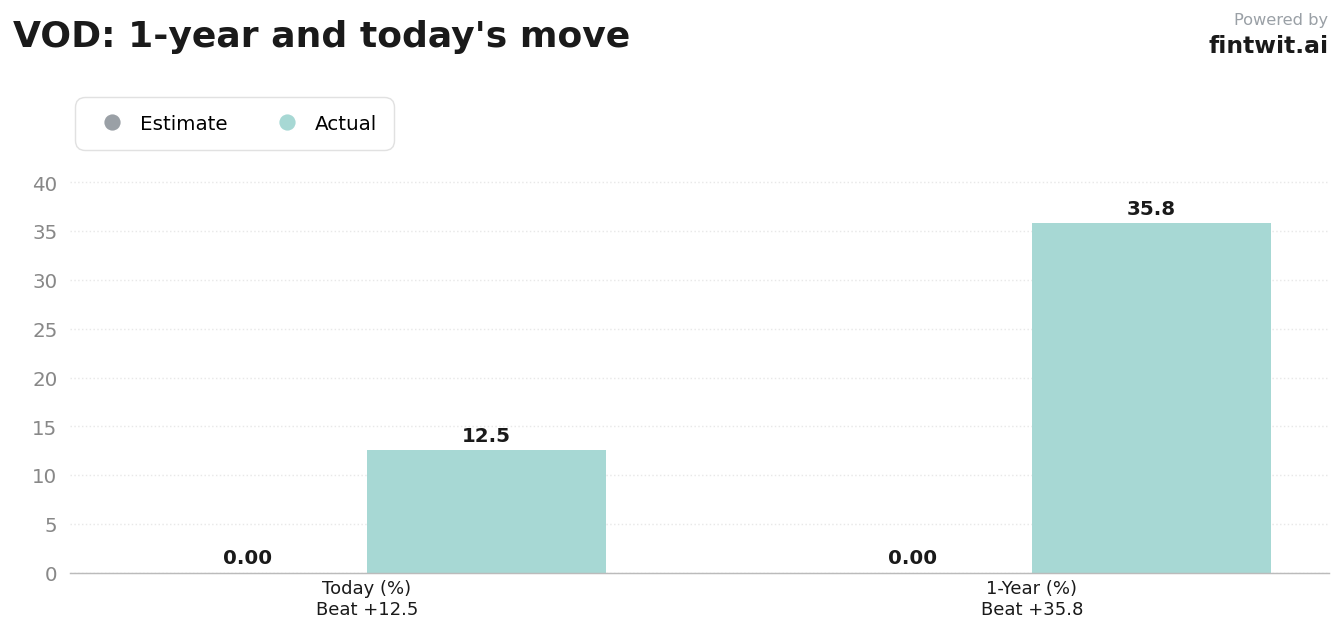
Should You Buy Vodafone Group (VOD) After the 12.54% Surge?
Vodafone shares spiked 12.54% on news of a major ownership change. Is this the start of a turnaround or a value trap?

What just happened
The market reacted sharply to the news that French billionaire Xavier Niel is taking a significant 16.2% stake in Vodafone. This move effectively replaces e& as the primary anchor shareholder, signaling a potential shift in corporate strategy and governance.
Vodafone has spent the last year attempting to shed its reputation as a sleepy utility stock. The company reported organic service revenue growth of 5.4% in its FY26 results, released in May 2026, and successfully finalized the buyout of VodafoneThree.
Bull case
Proponents argue that the arrival of an activist investor like Niel provides the necessary pressure to unlock value that has been trapped by bureaucratic inertia.
The current valuation remains undemanding, providing a margin of safety for long-term holders.
- The stock trades at approximately 0.9x sales and 0.6x book value.
- Vodafone maintains a solid dividend yield of roughly 3.8%.
- The company recently increased its dividend payout by 2.5%.
- New Street Research analyst James Ratzer upgraded the stock to Buy, citing improved conviction in upside potential.
- Deutsche Bank maintains a Buy rating with a 150 GBp price target.
- The company holds a 55% controlling stake in Safaricom, providing exposure to high-growth African markets.
Bear case
Skeptics point to the structural challenges inherent in the European telecom sector, where high capital expenditure requirements often cannibalize free cash flow.
The stock's recent momentum may be driven more by speculative fervor surrounding the ownership change than by fundamental operational improvements.
- Barclays downgraded the stock to equal-weight in June 2026, signaling caution regarding the company's long-term trajectory.
- Operational restructuring remains in the early stages, with significant execution risk regarding the integration of VodafoneThree.
- The company faces intense regulatory scrutiny across its primary European markets.
- Historical performance has been lackluster, with the stock struggling to maintain consistent growth prior to the recent spike.
Fintwit's AI verdict
The algorithmic analysis of Vodafone’s current position weighs the recent ownership shake-up against the persistent headwinds facing the broader telecommunications industry. While the entry of a high-profile activist investor often serves as a catalyst for short-term price appreciation, the underlying fundamentals require a more disciplined look at long-term cash flow sustainability.
Investors must determine if the current premium is justified by the promise of future restructuring or if the market is overreacting to a change in the cap table. The model’s proprietary assessment suggests a cautious approach as the dust settles on the recent transaction.