Taiwan Semiconductor Manufacturing (TSM) Q2 2026 Earnings Preview: What to Watch
TSM enters its July 16 earnings report with strong momentum. We analyze the AI-driven demand, capacity bottlenecks, and revenue growth expectations.
The setup
TSM remains the primary beneficiary of the global AI infrastructure investment cycle. Management previously guided Q2 revenue between $39.0 billion and $40.2 billion, with gross margins targeted at 65.5% to 67.5%.
The core focus for investors is whether the company will raise its full-year 2026 revenue growth outlook, which currently stands at over 30% in USD terms. Capacity constraints in advanced packaging and leading-edge nodes remain the primary limiting factors for growth.
- High-Performance Computing (HPC) accounts for 61% of revenue, serving as the main indicator for hyperscaler AI accelerator demand.
- Smartphone segment revenue remains a critical secondary driver at 26% of total sales.
- Advanced Packaging (CoWoS) capacity is the primary bottleneck currently limiting chip production output.
- Geopolitical tensions and currency fluctuations between the USD and NTD remain key macro variables impacting margin sustainability.
Consensus numbers
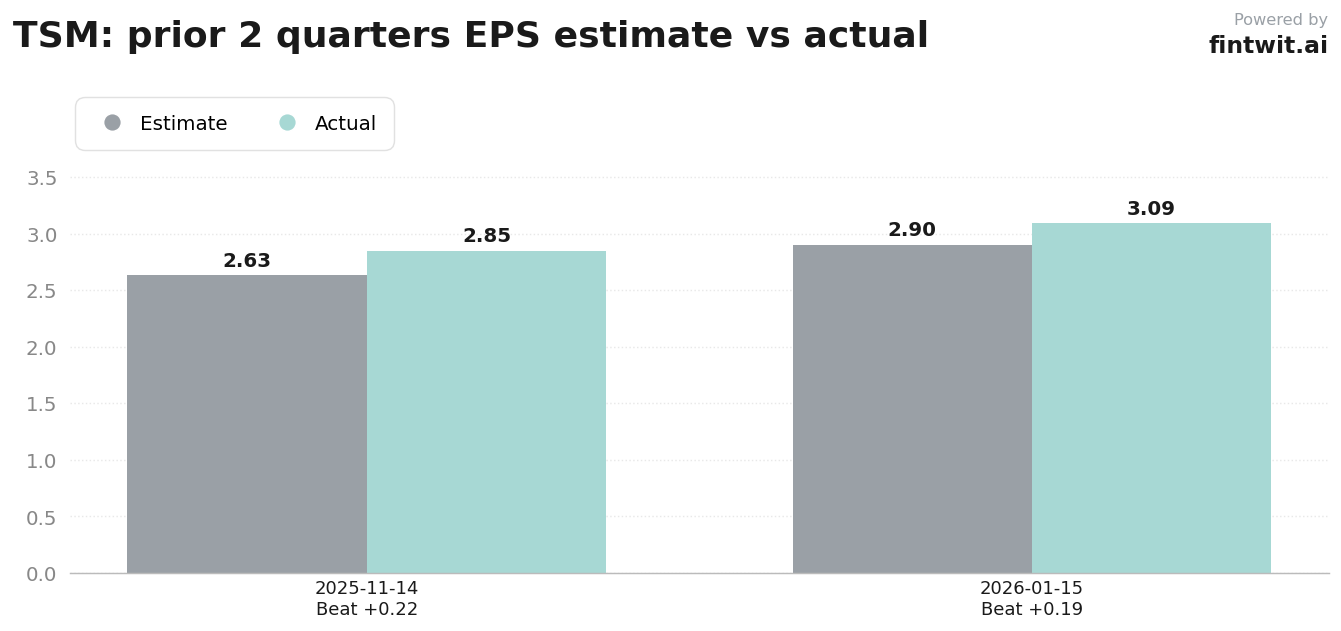
Market consensus estimates for the second quarter point toward continued expansion in both top and bottom-line figures. TSM has consistently outperformed analyst expectations over the last two quarters.
Analysts from firms including GF Securities, Barclays, and Citi maintain bullish outlooks, with price targets ranging from NT$2,900 to T$3,800.
- EPS Estimate: $3.80 per share.
- Revenue Estimate: $39.91 billion.
- Beat History: TSM beat EPS estimates in both November 2025 and January 2026.
- Jeff Pu (GF Securities) target: NT$2,900.
- Simon Coles (Barclays) target: $625.
- Laura Chen (Citi) target: T$3,800.
What we'll watch on the call
Management commentary regarding 2027 capital expenditure plans will be the most significant indicator of long-term capacity strategy. Investors are looking for evidence that TSM is accelerating investment to resolve CoWoS bottlenecks.
Pricing power remains a central theme for the 3nm and 2nm nodes. Analysts will scrutinize whether these advanced nodes are contributing to margin expansion or if they are being offset by higher R&D and equipment costs.
- Will management raise the full-year 2026 revenue growth outlook above 30%?
- What is the specific timeline for CoWoS capacity expansion to meet current demand levels?
- How are pricing adjustments for 3nm and 2nm nodes impacting gross margin sustainability?
- What is the current outlook for the 2nm production ramp-up scheduled for 2027?
- How does management view the sustainability of AI demand versus potential softening in non-AI markets?
Fintwit's AI verdict
Market sentiment surrounding TSM has reached a critical inflection point as the company balances massive AI demand against complex geopolitical and supply chain constraints. The upcoming earnings call will likely serve as a definitive signal for the broader semiconductor sector's trajectory through the end of the year.
Investors are weighing the potential for upward revisions to revenue guidance against the risks of capacity bottlenecks. The consensus among quantitative models suggests a high degree of confidence in the company's ability to maintain its dominant market position.