The Top Dividend Yields Right Now: Who Is Safe and Who Is a Trap
High yields often signal distress. We analyze the current dividend landscape to separate sustainable income from dangerous traps.

Why these yields right now
Market volatility has pushed dividend yields to levels not seen in years, creating a bifurcated landscape for income investors. High yields are frequently a function of declining share prices rather than fundamental dividend growth.
Investors must distinguish between companies resetting payouts to sustainable levels and those facing structural earnings decay. A high yield is only valuable if the underlying cash flow supports the distribution over a multi-year horizon.
The top yielders
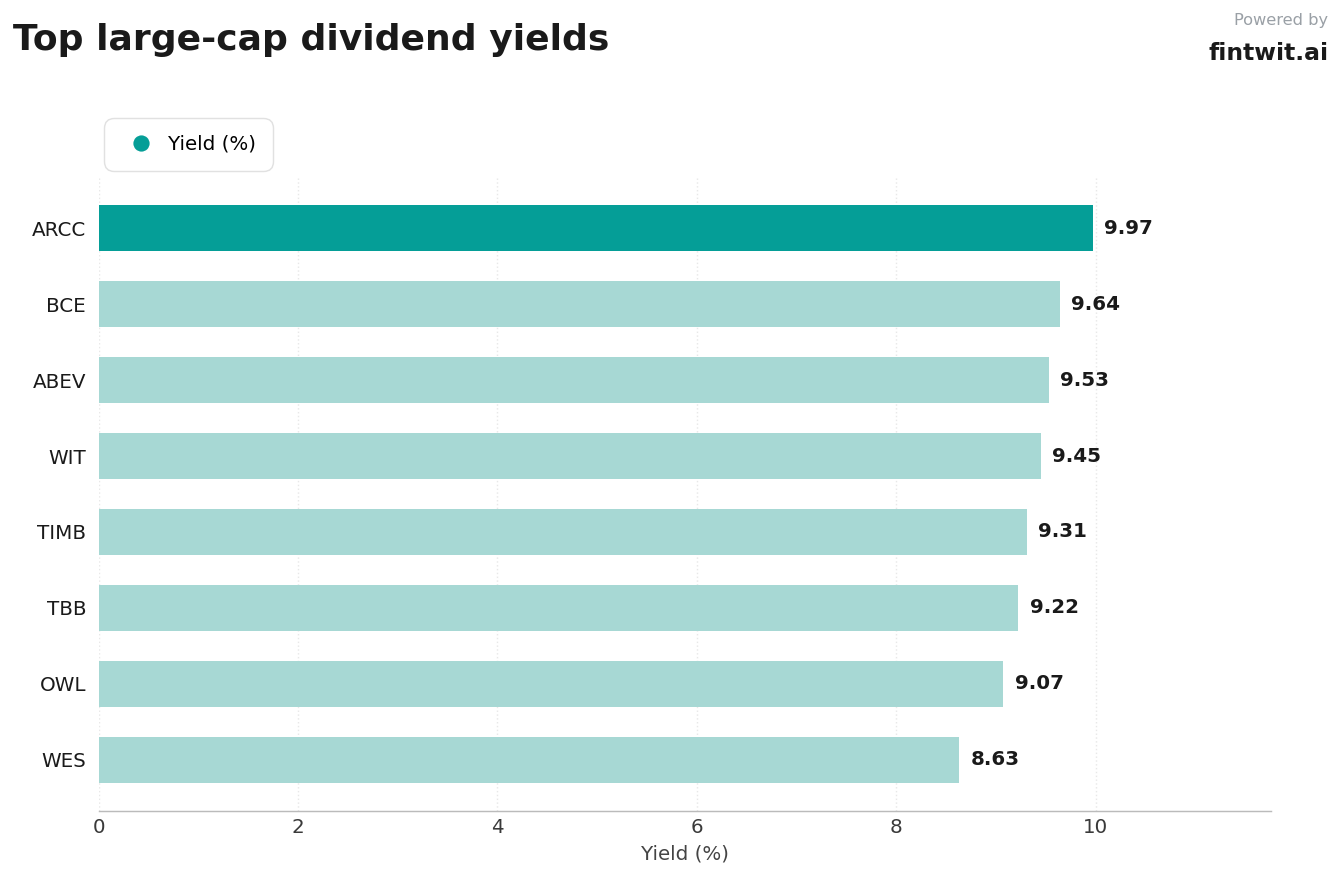
The following companies maintain high yields, though their safety profiles vary significantly based on payout ratios and cash flow coverage.
Investors should prioritize companies with consistent dividend histories and manageable payout ratios relative to their sector peers.
- Ares Capital (ARCC): 9.97% yield, 117.79% payout ratio, moderate safety.
- BCE Inc (BCE): 9.64% yield, 180% payout ratio, improved safety under new framework.
- Ambev SA (ABEV): 9.53% yield, 10.53% payout ratio, high safety.
- Wipro Limited (WIT): 9.45% yield, 87.32% payout ratio, moderate safety.
- TIM Participacoes (TIMB): 9.31% yield, variable payout, low predictability.
- AT&T Inc (T): 9.22% yield, 37.25% payout ratio, moderate safety.
- Blue Owl Capital (OWL): 9.07% yield, 675.36% payout ratio, low safety.
- Western Midstream (WES): 8.63% yield, 122% payout ratio, moderate safety.
Yield traps
A yield trap occurs when a company's dividend yield appears attractive but is unsustainable due to deteriorating business fundamentals or excessive debt.
Investors should scrutinize these specific tickers for potential dividend cuts or capital erosion.
- Blue Owl Capital (OWL): Extremely high payout ratio of 675.36% indicates potential sustainability issues.
- BCE Inc (BCE): High leverage and a 180% payout ratio remain primary concerns despite recent dividend resets.
- Ares Capital (ARCC): Exposure to non-accrual loan rate fluctuations creates risk for the 117.79% payout ratio.
- TIM Participacoes (TIMB): Reliance on variable special dividends makes income stream highly unpredictable.
Build an income sleeve
Constructing a resilient income sleeve requires balancing high-yield exposure with companies that possess strong cash coverage. Ambev SA (ABEV) stands out with a 10.53% payout ratio, suggesting significant room for dividend maintenance or growth.
Investors should monitor ex-dividend dates and quarterly earnings reports to ensure payout coverage remains within management's stated targets. Diversification across sectors like consumer defensive and energy can mitigate the risks associated with telecom and asset management volatility.