Tesla Inc (TSLA) Q2 2026 Earnings Preview: What to Watch
Tesla faces a margin reckoning as record deliveries meet heavy AI spending. We break down the key metrics to watch ahead of the July 22 earnings call.
The setup
Tesla's Q2 2026 narrative is defined by the tension between record-breaking delivery volumes and the sustainability of automotive gross margins. While the 480,126 vehicle deliveries suggest strong demand, the market is skeptical about the cost of this growth in a high-interest-rate environment.
Investors are also weighing the impact of a $25 billion-plus capital expenditure guidance for 2026. This spending is primarily directed toward AI infrastructure, robotics, and the development of the Cybercab, which continues to weigh on free cash flow.
- Competition from BYD and other global legacy automakers continues to pressure pricing power.
- Input costs for lithium and copper remain volatile, creating headwinds for automotive gross margins.
- The high-interest-rate environment continues to limit consumer discretionary spending on premium vehicles.
Consensus numbers
Wall Street consensus estimates for the quarter reflect a cautious outlook on profitability despite the volume surge. Analysts are closely monitoring whether the company can maintain its margin profile in the face of aggressive promotional financing.
The following figures represent the current consensus expectations for the Q2 2026 report.
- EPS Estimate: $0.50 to $0.54 per share.
- Revenue Estimate: $26.07 billion.
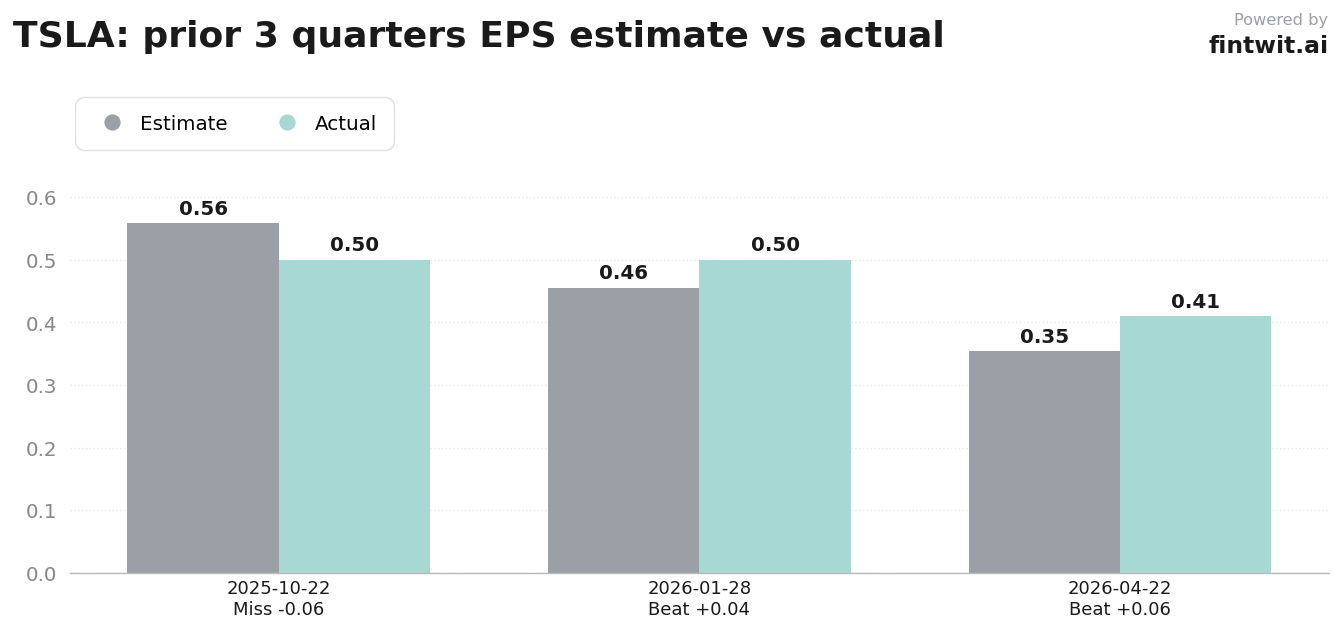
- Q1 2026 Actual EPS: $0.41 against $0.354 estimate.
- Q1 2026 Actual Revenue: $22.387 billion against $22.10 billion estimate.
- UBS (Joseph Spak) Price Target: $442.
- Morgan Stanley (Andrew Percoco) Price Target: $417.
- Wells Fargo (Colin Langan) Price Target: $130.
What we'll watch on the call
Management's commentary on the timing of the Cybercab robotaxi and Optimus Gen 3 production will be the primary drivers of post-earnings volatility. Investors are seeking clarity on why previous rollout targets for FSD and robotaxi operations have been missed.
The energy generation and storage segment is also under the microscope following record deployments of 13.5 GWh in Q2. This segment is increasingly viewed as a critical secondary growth engine that could help offset automotive margin compression.
- Constraints to expanding robotaxi operations and their alignment with Cybercab production timelines.
- Status of the Optimus Gen 3 production ramp and the potential for external sales.
- Strategies for balancing aggressive AI/robotics investment with the goal of positive free cash flow.
- Sustainability of automotive gross margins given the reliance on promotional financing.
Fintwit's AI verdict
The market sentiment surrounding Tesla remains highly polarized, with analysts split between the long-term potential of its AI initiatives and the immediate risks to its core automotive business. The upcoming earnings call will likely serve as a litmus test for whether the company can successfully transition from a pure-play EV manufacturer to an AI-driven robotics firm.
Investors should prepare for significant price swings as the market digests the balance between heavy capital outlays and the delivery of promised technological milestones.