Raytheon Technologies Corp (RTX) Q2 2026 Earnings Preview: What to Watch
Raytheon Technologies (RTX) reports Q2 2026 earnings on July 23. Analysts expect $1.66 EPS as the firm navigates defense demand and supply chain constraints.
The setup
Raytheon Technologies enters the second quarter of 2026 following a strong Q1 performance that saw the company exceed earnings expectations. The current market environment is defined by heightened geopolitical demand for munitions and integrated air defense systems, which remains a primary tailwind for the defense segment.
Management has set full-year 2026 adjusted EPS guidance at $6.60 to $6.80. Investors are looking for confirmation that the company can maintain these targets despite inflationary pressures on logistics and materials.
- FY 2026 adjusted sales guidance remains set at $92.0 billion to $93.0 billion.
- Jefferies maintains a Buy rating on RTX with a price target of $220.
- BNP Paribas analyst Matt Akers expects the company to beat forecasts and potentially raise full-year outlooks.
- Morgan Stanley maintains a constructive view on the firm's ability to leverage its massive backlog.
Consensus numbers
Wall Street analysts have coalesced around specific targets for the upcoming report. The consensus EPS estimate stands at $1.66, with revenue projected at $22.89 billion.
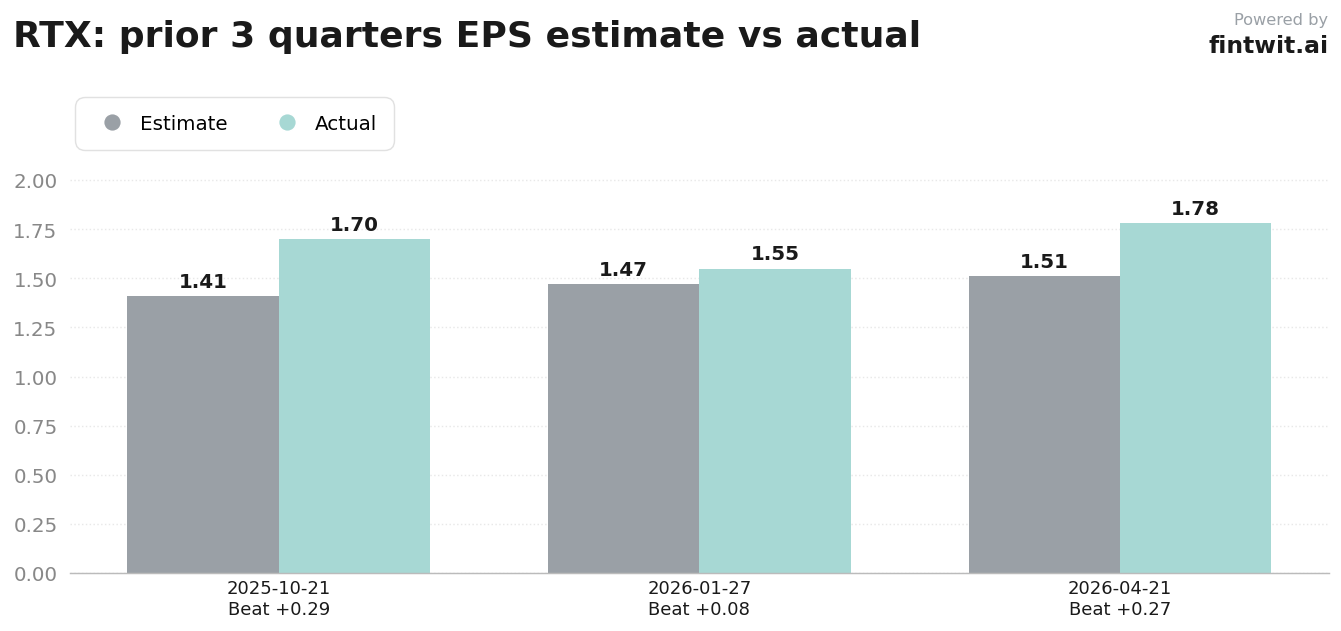
The company has demonstrated a consistent ability to outperform these estimates over the last three quarters, as shown in the historical data below.
- Q2 2026 EPS Estimate: $1.66.
- Q2 2026 Revenue Estimate: $22.89 billion.
- Q1 2026 Actual EPS: $1.78 (vs $1.51 estimate).
- Q4 2025 Actual EPS: $1.55 (vs $1.47 estimate).
- Q3 2025 Actual EPS: $1.70 (vs $1.41 estimate).
What we'll watch on the call
The earnings call will focus on the operational health of the three primary business segments. Pratt & Whitney, Raytheon, and Collins Aerospace each face distinct challenges regarding capacity and margin expansion.
Management's commentary on capital allocation will also be under scrutiny. Specifically, investors are looking for updates on share buyback programs and debt reduction efforts.
- Pratt & Whitney: Monitoring commercial aftermarket growth rates and the resolution of engine-related litigation risks.
- Raytheon: Assessing defense bookings and program performance to gauge competitive positioning in munitions.
- Collins Aerospace: Evaluating operational leverage and margin expansion as commercial production ramps up.
- Macro Factors: Tracking how tariff-related cost pressures are impacting segment-level margins.
- Supply Chain: Measuring the sustainability of backlog conversion rates given ongoing labor and material constraints.
Fintwit's AI verdict
The quantitative models tracking RTX indicate a high degree of confidence in the company's ability to navigate current industrial headwinds. The combination of a record backlog and sustained defense spending provides a floor for performance that few peers can match.
While supply chain volatility remains a risk, the firm's recent history of beating estimates suggests that operational execution is currently outpacing market expectations. The upcoming report will likely serve as a confirmation of this trend.