Should You Buy Regencell Bioscience (RGC) Right Now?
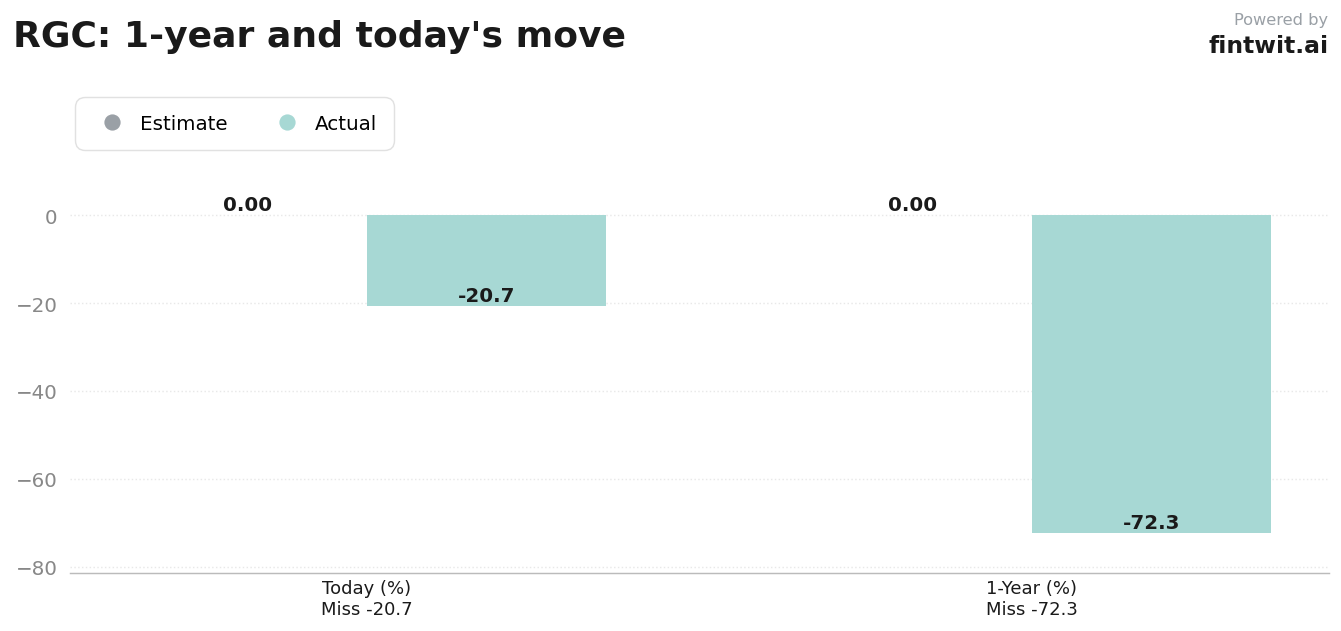
Regencell Bioscience (RGC) shares fell 20.67% today. We break down the DOJ investigation, the lack of revenue, and the current analyst consensus.

What just happened
The sharp sell-off in RGC shares follows news that the U.S. Department of Justice is investigating the company's trading practices. This regulatory hurdle adds to existing investor anxiety regarding the firm's status as a going concern.
The company has struggled to generate meaningful revenue, leaving its balance sheet vulnerable to liquidity risks. Investors are reacting to the combination of legal uncertainty and a lack of fundamental financial performance.
The stock has now declined approximately 72.29% over the past year, reflecting sustained downward momentum.
Bull case
- The company is actively pursuing clinical trials for Traditional Chinese Medicine (TCM) therapies targeting ADHD and ASD.
- Successful clinical data could theoretically provide a catalyst for valuation re-rating if the company secures regulatory approval.
- The firm maintains a focus on niche therapeutic areas where current treatment options remain limited.
Bear case
- The U.S. Department of Justice is currently investigating the company's trading activity, creating significant legal and reputational risk.
- Regencell Bioscience currently reports no revenue, raising concerns about its long-term viability as a going concern.
- The stock has declined roughly 61% year-to-date, indicating persistent selling pressure.
- MarketBeat reports a consensus rating of Sell based on current analyst coverage.
- The company lacks traditional valuation metrics like a P/E ratio, making it difficult to justify the current market capitalization of $13.53 billion.
- Future operations may require dilutive financing to address liquidity constraints.
Fintwit's AI verdict
Quantitative models are currently flagging extreme caution regarding this ticker. The combination of regulatory scrutiny and the absence of revenue generation creates a profile that deviates significantly from standard investment criteria.
Investors should consider how the current algorithmic signals weigh the risk of further volatility against the potential for clinical trial outcomes. The data suggests that the current market environment for this equity remains highly unfavorable for those seeking fundamental stability.