Should You Buy PSNYW Right Now? A Deep Dive Into Polestar's Financials
Polestar (PSNYW) is navigating a complex transition. Is the current valuation justified, or is the risk of further dilution too high for retail investors?

What just happened
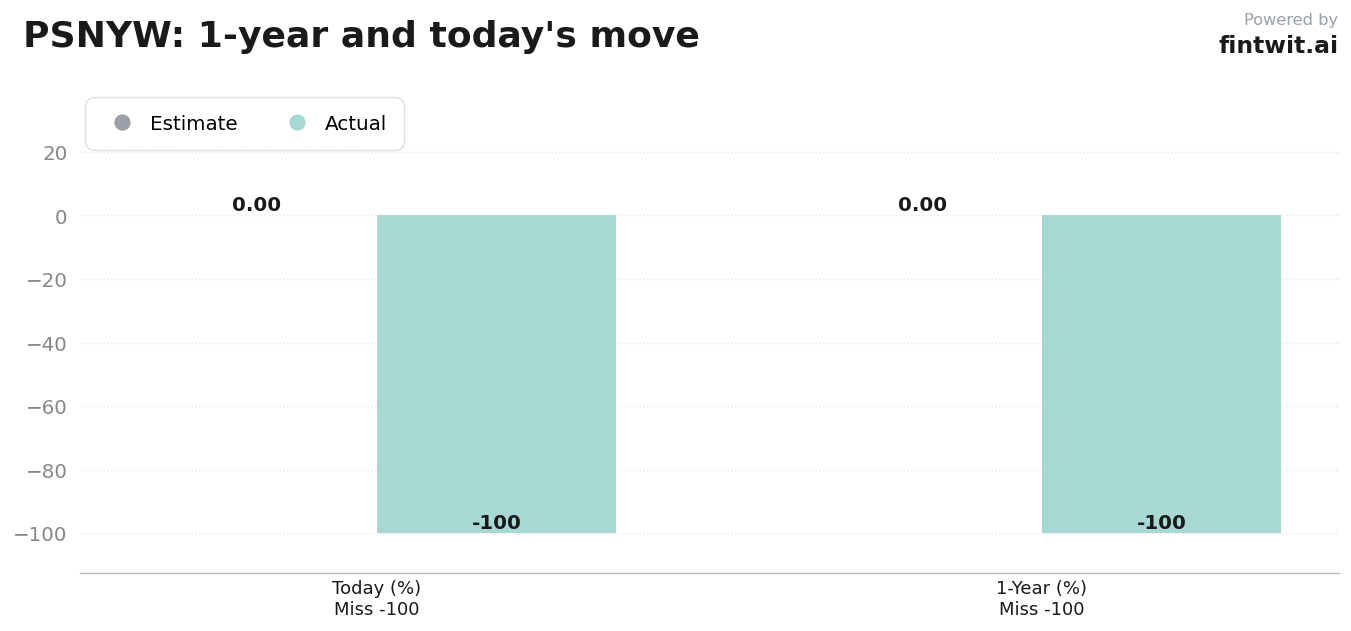
The -100% price movement displayed on various platforms is a reporting error stemming from the company's complex ADS ratio adjustments and market volatility. Polestar's warrants remain active, with recent insider activity as late as July 6, 2026, confirming the security is not defunct.
Investors should note that the company is currently navigating a difficult transition period. This includes a strategic pivot away from the U.S. market following regulatory hurdles.
Bull case
- Polestar achieved record Q1 2026 deliveries of 13,126 units, representing a 7% year-over-year increase.
- The company is aggressively expanding its global retail footprint, targeting 250 sales points by the end of 2026.
- A new Polestar 4 SUV variant is scheduled for market launch on September 2, 2026, to bolster the model lineup.
- Management is prioritizing the localization of manufacturing in Europe to mitigate the impact of international tariffs.
Bear case
- The company reported a net loss of $383 million for Q1 2026, highlighting significant operational challenges.
- Gross margins have deteriorated, swinging to -3.2% compared to +10.3% in the prior year.
- InvestingPro data indicates a cash burn rate of $1.07 billion in negative free cash flow.
- Simply Wall St analysts maintain a neutral rating, noting the company is not forecast to reach profitability within the next three years.
- The U.S. Department of Commerce has effectively barred new vehicle sales in the U.S. starting in 2027, forcing a costly regional pivot.
Fintwit's AI verdict
Market sentiment remains heavily influenced by the company's inability to generate positive cash flow and the looming threat of further capital dilution. While the brand maintains a premium image, the underlying financial metrics suggest that the path to sustainability is fraught with execution risk.
Investors are currently weighing the potential for a successful European pivot against the reality of a shrinking addressable market and high debt levels. The following assessment reflects the current algorithmic consensus on the stock's risk-adjusted outlook.