The Nuclear Renaissance: Why AI Hyperscalers Are Betting Big on CEG and VST
AI data centers are driving a structural shift in energy, turning nuclear power from a defensive utility play into a high-growth infrastructure asset.
The thesis
The nuclear renaissance is a structural shift driven by the insatiable, 24/7 power requirements of AI data centers. Intermittent renewables have proven insufficient for the high-uptime needs of hyperscalers, while fossil fuels face increasing scrutiny regarding carbon mandates.
This theme represents a transition from nuclear as a defensive utility play to a high-growth, mission-critical infrastructure asset. Tech giants are now bypassing traditional utility frameworks to secure long-term, carbon-free baseload power directly from operators.
Why now
Mason Emnett of Constellation Energy notes that competitive markets, where investors bear the risk rather than consumers, matter more than ever as the U.S. enters a new era of electricity growth. The current market is defined by a scarcity premium where operating assets with existing grid interconnections command significant value.
The gap between today's power purchase agreements and the deployment of tomorrow's reactors is widening. Hyperscalers are willing to pay a premium to lock in supply, effectively decoupling nuclear operators from the volatility of traditional retail electricity markets.
Stocks we're watching
The sector is entering an aggressive consolidation and execution phase. Pre-revenue developers face a prove-it period to demonstrate commercial viability, while established operators leverage their existing fleets to capture premium pricing.
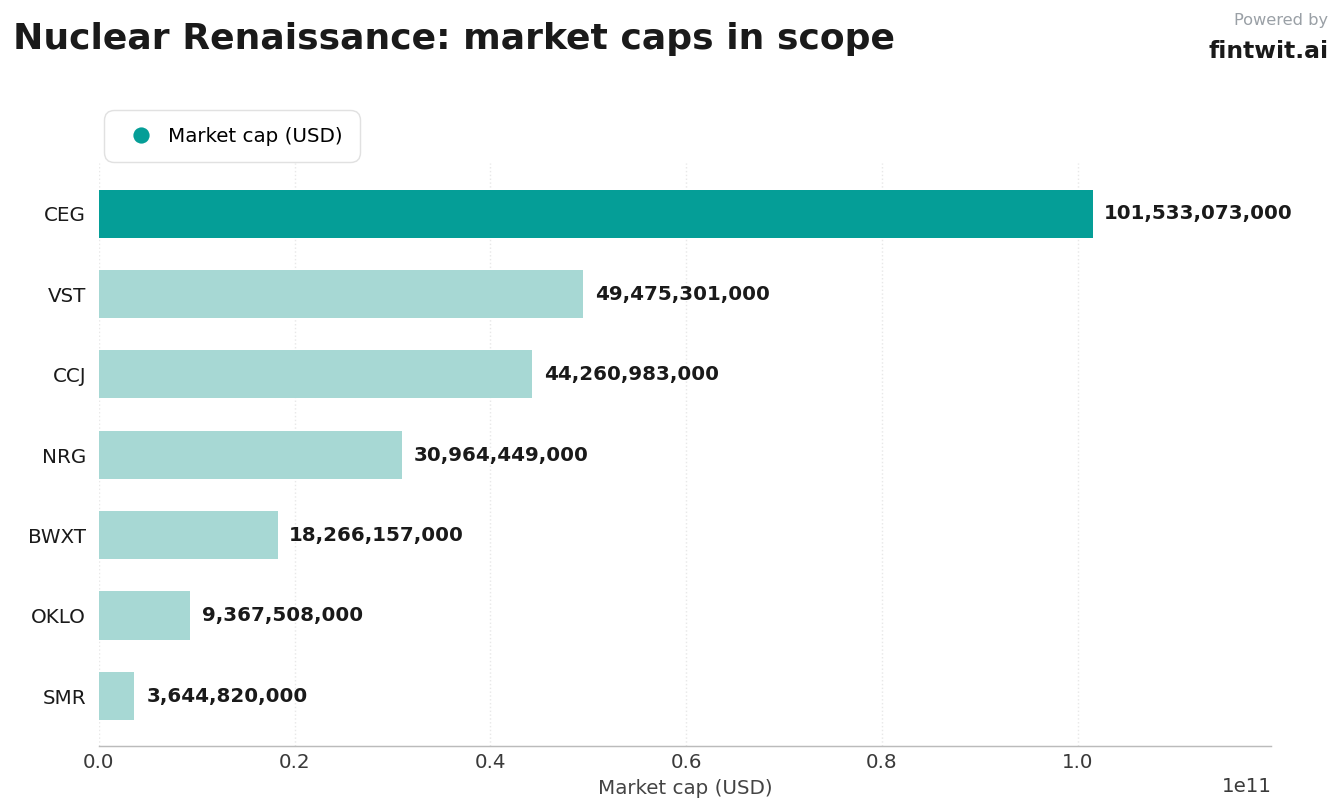
Market capitalization data highlights the concentration of value in the established independent power producers compared to the emerging SMR developers.
- CEG (Constellation Energy): The dominant U.S. nuclear fleet operator, serving as the primary partner for hyperscalers seeking immediate, reliable, carbon-free baseload power.
- VST (Vistra Energy): A major nuclear power generator leveraging its expanded fleet and Vistra Vision subsidiary to capture premium pricing from long-dated data center PPAs.
- NRG (NRG Energy): A diversified power producer positioned to benefit from the broader tightening of electricity supply-demand dynamics in competitive markets.
- BWXT (BWX Technologies): A critical provider of specialized nuclear components and fuel, essential for both existing fleet maintenance and the deployment of next-generation reactors.
- CCJ (Cameco): The world's leading high-grade uranium miner, providing the essential yellowcake fuel required to power the global nuclear expansion.
- OKLO (Oklo Inc.): An emerging SMR developer utilizing AI-enabled design and streamlined regulatory pathways to target decentralized, small-scale power solutions.
- SMR (Nuscale Power): A pioneer in small modular reactor technology, aiming to provide scalable, factory-built nuclear power to meet localized industrial and data center demand.
Risks that break it
The transition to a nuclear-heavy grid is not without significant hurdles. Investors must weigh the potential for high-growth returns against binary outcomes inherent in nuclear infrastructure projects.
Execution risk remains the primary concern for the sector, as historical precedents for nuclear construction are marked by significant budget blowouts and multi-year delays.
- Execution and cost overruns: Historical precedents of massive budget blowouts and multi-year delays in nuclear construction remain a significant threat to project viability.
- Regulatory and social friction: Public opposition, complex permitting processes, and evolving environmental regulations can stall or derail reactor restarts and new deployments.
- Technological unprovenness: Many SMR and advanced reactor designs are pre-revenue and lack a track record of commercial-scale operation, creating high binary risk for investors.