AstraZeneca PLC (AZN) Q2 2026 Earnings Preview: What to Watch
AstraZeneca enters its July 27 earnings report with a 60% probability of beating EPS estimates. We break down the key segments and risks to watch.
The setup
AstraZeneca continues to balance high-growth oncology assets against the reality of clinical trial setbacks. Management has reiterated its full-year 2026 guidance, targeting mid-to-high single-digit revenue growth and low double-digit Core EPS growth at constant exchange rates.
The firm faces a complex macro environment. Foreign exchange volatility is expected to provide a low single-digit positive impact on revenue, while rising finance expenses from higher lease costs remain a drag on margins.
- Goldman Sachs maintains a Buy rating with a $97.00 price target, citing confidence in long-term pipeline execution.
- Guggenheim analysts lowered 2030 revenue forecasts following the Wainua trial setback, emphasizing pipeline risk.
- RBC Capital Markets analyst Shagun Singh remains positive on the 2026 trajectory despite sector-wide oncology misses.
Consensus numbers
Wall Street expects a solid quarter, though the margin for error remains thin given the high valuation. The consensus estimate for Q2 2026 sits at $2.50 per share on $15.45 billion in revenue.
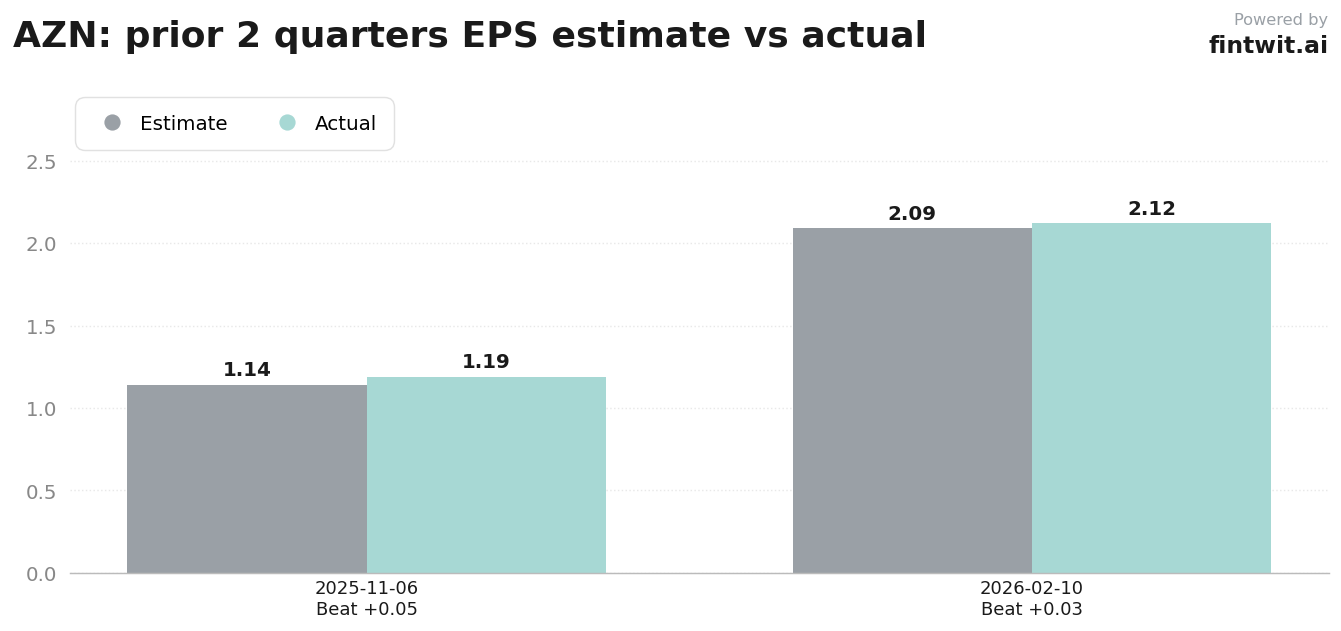
Historical performance shows a tendency to outperform, with the most recent February 2026 report showing an EPS of $2.12 against an estimate of $2.09.
- Q2 2026 EPS Estimate: $2.50
- Q2 2026 Revenue Estimate: $15.45 billion
- Beat probability: 60%
- Miss probability: 20%
- Inline probability: 20%
- Q4 2025 EPS: $1.19 (Estimate: $1.14)
- Q1 2026 EPS: $2.12 (Estimate: $2.09)
What we'll watch on the call
Investors are looking for evidence that the core oncology franchise can offset weakness in other segments. The performance of Tagrisso and the integration of the Zegfrovy licensing deal are critical metrics for the quarter.
Management must also address the impact of recent clinical trial setbacks on 2030 revenue targets. The market is particularly sensitive to how these failures influence future R&D capital allocation.
- Oncology: Performance of key assets like Tagrisso and the Zegfrovy agreement impact.
- Rare Disease: Long-term revenue trajectory following the Wainua trial failure.
- CVRM: Revenue erosion from loss of exclusivity on legacy products like Brilinta.
- SG&A: Investment levels required to support recent R&D successes.
- Pricing: Impact of MFN pricing provisions on future drug launches and margins.
Fintwit's AI verdict
The quantitative model suggests that the current market pricing does not fully account for the resilience of the oncology pipeline. While clinical setbacks have dampened sentiment, the underlying commercial execution remains consistent with long-term growth targets.
Investors should weigh the potential for a positive earnings surprise against the ongoing regulatory and pricing pressures. The current setup offers a compelling entry point for those focused on the 2026-2027 growth cycle.