Should You Buy VRT Right Now? Analyzing the Vertiv Holdings Co Sell-Off
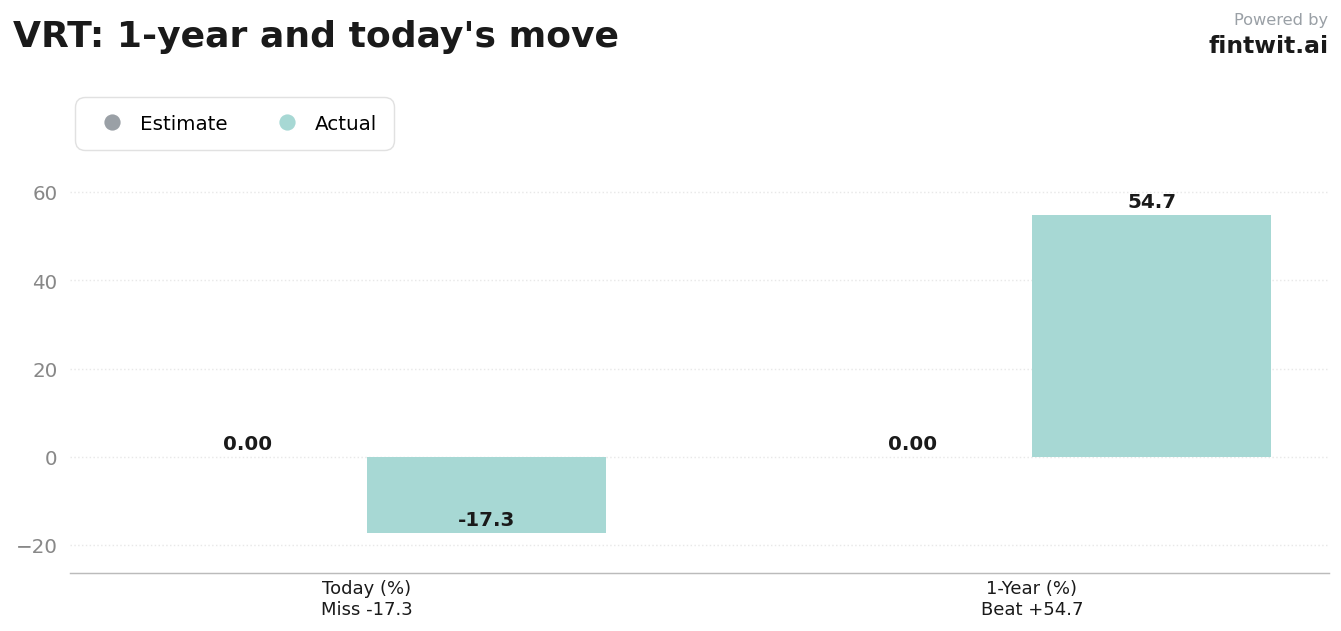
Vertiv shares fell 17.26% after a revenue miss. Is this a buying opportunity for the AI infrastructure leader?
What just happened
Management attributed the revenue shortfall to minor timing shifts within complex, multi-phased AI infrastructure projects. Despite the top-line miss, the company beat earnings expectations and raised its full-year 2026 guidance.
The market reaction reflects profit-taking after a period of significant appreciation. Vertiv shares had gained 54.71% over the past 12 months prior to this correction.
Bull case
- Vertiv maintains a record $15 billion backlog, providing high visibility into future revenue streams.
- The company reported 24% year-over-year revenue growth for the second quarter of 2026.
- Diluted EPS increased by 53% year-over-year, demonstrating strong operational leverage.
- Management raised full-year 2026 guidance, signaling confidence in sustained demand for data center cooling and power solutions.
- RBC Capital maintains an Outperform rating with a $418 price target, citing Vertiv's dominant market position.
- KeyBanc initiated coverage with an Overweight rating and a $360 price target, highlighting the company's multi-year growth trajectory.
Bear case
- The stock currently trades at a P/E ratio of 75.26, which leaves little room for execution errors.
- Evercore ISI lowered its price target from $425 to $375, noting the stock trades above fair value following the mixed results.
- Supply chain congestion remains a persistent risk factor for large-scale, multi-phased infrastructure deployments.
- The dividend yield is nominal at approximately 0.1%, offering little protection for investors during periods of high volatility.
- The complexity of liquid cooling integration for next-generation AI chips could lead to further project timing shifts.
Fintwit's AI verdict
The recent volatility in Vertiv shares highlights the tension between aggressive growth expectations and the logistical realities of building AI-ready data centers. While the revenue miss triggered a sharp correction, the underlying fundamentals—specifically the record backlog and raised guidance—suggest the long-term thesis remains intact for those with a high risk tolerance.
Investors must weigh the premium valuation against the company's role as a critical supplier to hyperscalers and AI chip leaders. Our proprietary model evaluates these factors to determine if the current entry point aligns with the company's projected earnings trajectory.