Should You Buy PSNYW Right Now? Analyzing the Polestar Surge
Polestar (PSNYW) shares jumped 133% this week. Is the rally sustainable or a trap for retail investors?

What just happened
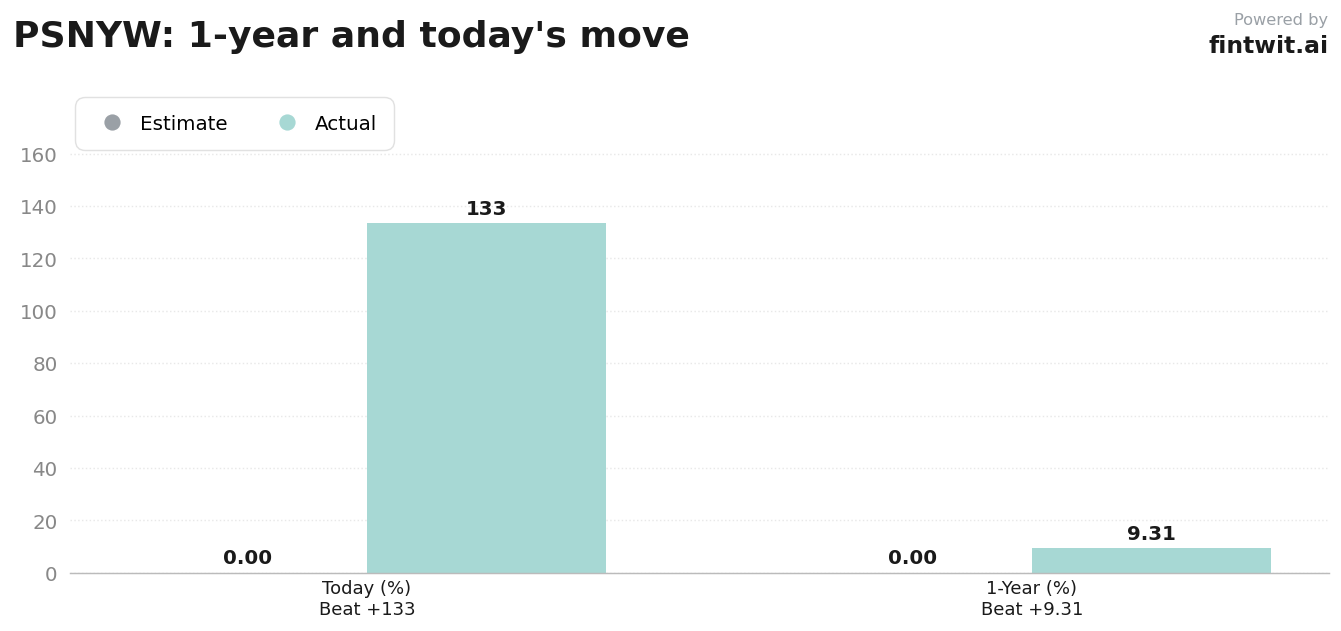
The 133.33% move in PSNYW is driven by a combination of positive sentiment following record H1 2026 retail sales of 30,423 units and the successful completion of a $640 million debt-to-equity conversion. This financial maneuver significantly improved the company's balance sheet and liquidity position, easing immediate bankruptcy concerns.
Despite the rally, the stock remains in a volatile state as investors weigh operational growth against persistent financial fragility. The 1y-and-today chart illustrates the dramatic departure from the stock's previous trading range.
Bull case
- Retail sales volumes hit record highs, up 7% year-over-year in Q1 2026.
- The global retail network is expanding rapidly toward a 250-site target by year-end 2026.
- Barclays maintains a bullish outlook with a $15.00 price target, citing long-term potential in the premium EV segment.
- The $640 million debt-to-equity conversion provides a necessary runway for upcoming model launches.
- The upcoming Polestar 4 variant launch in Q4 2026 is expected to drive further volume growth.
Bear case
- Financial performance remains challenged by negative gross margins of -3.2% in Q1 2026.
- Net losses continue to widen despite the increase in unit deliveries.
- Bernstein maintains a bearish rating with a $0.78 price target, citing skepticism regarding the path to profitability.
- Market consensus remains neutral with an average price target of $4.09, reflecting deep tension between growth and financial health.
- The company is executing a strategic pivot to focus on European markets following the U.S. regulatory exit for new model year 2027 vehicles.
- Intense competitive pressures in the premium EV space threaten to erode market share.
Fintwit's AI verdict
The algorithmic assessment of Polestar's current financial trajectory suggests that the recent price action may be disconnected from the underlying fundamentals. While the operational milestones are notable, the structural deficit in margins creates a high hurdle for long-term sustainability.
Investors should look closely at the divergence between the current market price and the consensus analyst valuation before committing capital. The following indicator provides a synthesized view of the risk-reward profile for the current session.