Should You Buy Natera (NTRA) Right Now?
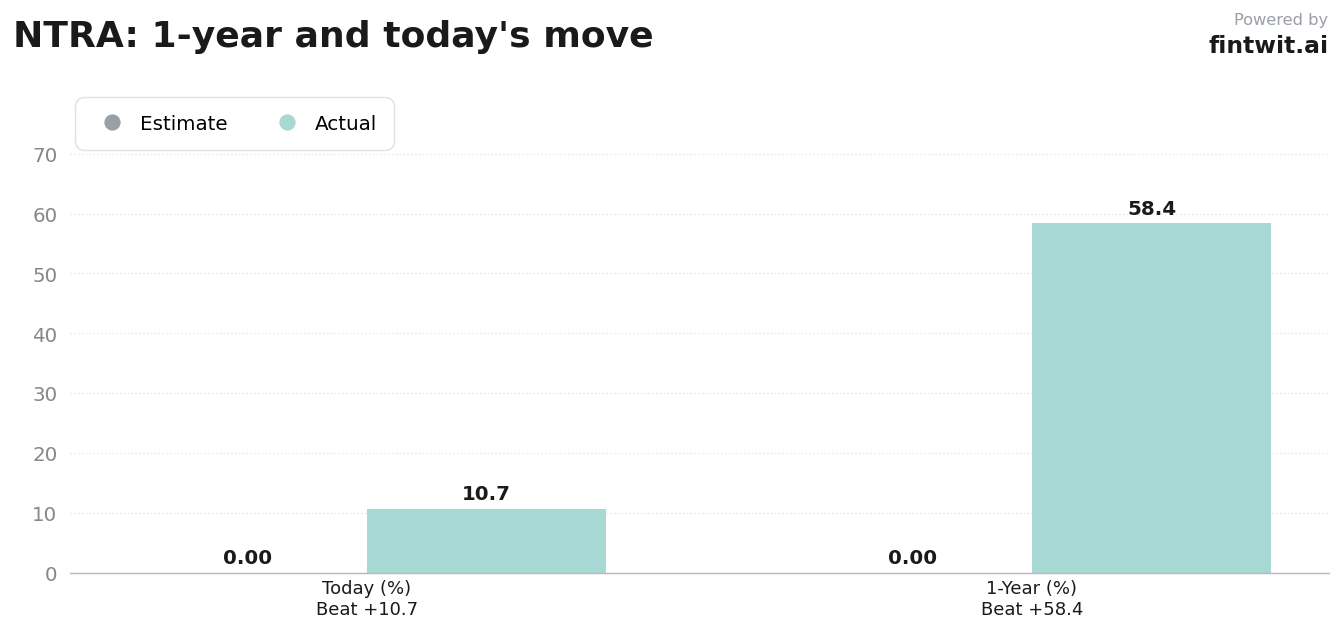
Natera (NTRA) shares surged 10.74% following a major NCCN guideline win. We analyze the bull and bear cases for this high-growth diagnostics leader.

What just happened
The NCCN's decision to grant Signatera a Category 1 recommendation for muscle-invasive bladder cancer removes a primary barrier to clinical adoption. This endorsement effectively validates the test as a standard of care, forcing oncologists to reconsider their diagnostic protocols.
Natera shares are up 58.36% over the past 12 months, reflecting a consistent trend of clinical validation and commercial execution. The market reaction indicates that investors view this guideline update as a long-term revenue multiplier rather than a one-time event.
Bull case
- Oncology test volumes grew 54.4% year-over-year in Q1 2026, demonstrating massive market penetration.
- BTIG analyst Mark Massaro raised his price target to $270, citing the removal of clinician pushback as a key catalyst.
- RBC Capital analyst Dan Leonard notes that Natera maintains over 90% share in the oncology minimal residual disease market.
- The company raised its 2026 revenue guidance to a range of $2.74 billion to $2.82 billion.
- Natera has achieved positive quarterly cash inflow, signaling a transition toward sustainable operations.
Bear case
- Goldman Sachs analyst Evie Koslosky initiated coverage with a neutral rating and a $245 price target, suggesting current valuation may be stretched.
- The company remains unprofitable on a GAAP basis, with negative EBIT margins continuing to weigh on the balance sheet.
- Regulatory risks persist regarding future Medicare coverage expansions for the remaining seven cancer types in the pipeline.
- High reliance on the Signatera product line creates concentration risk if competitive diagnostic technologies gain similar guideline status.
Fintwit's AI verdict
The algorithmic sentiment analysis for Natera is currently processing the intersection of rapid volume growth and the recent NCCN endorsement. While the valuation premium is evident, the underlying clinical momentum suggests a specific trajectory for institutional interest.
Investors are weighing the current price against the potential for expanded Medicare coverage and international market entry. The data points toward a distinct outlook for the coming fiscal quarters.