Salesforce (CRM) vs Oracle (ORCL): Which Enterprise Software Giant is the Better Buy?
Salesforce and Oracle are both betting big on AI. We analyze the financials and risks to see which enterprise software leader is the better buy.

The matchup
Salesforce and Oracle represent two distinct approaches to the enterprise software transition in 2026. Salesforce focuses on application-layer dominance through its Data Cloud and Agentforce platform, aiming to monetize AI through high-margin software seats.
Oracle has pivoted toward a capital-intensive infrastructure model, spending heavily to build out the cloud capacity required to host massive AI workloads. This divergence creates a clear choice between software-led margin expansion and infrastructure-led revenue scale.
- Salesforce market cap: $183.07 billion.
- Oracle market cap: $423.49 billion.
- Salesforce primary moat: Proprietary enterprise data sets.
- Oracle primary moat: Dominant database infrastructure and IaaS scaling.
Numbers side by side
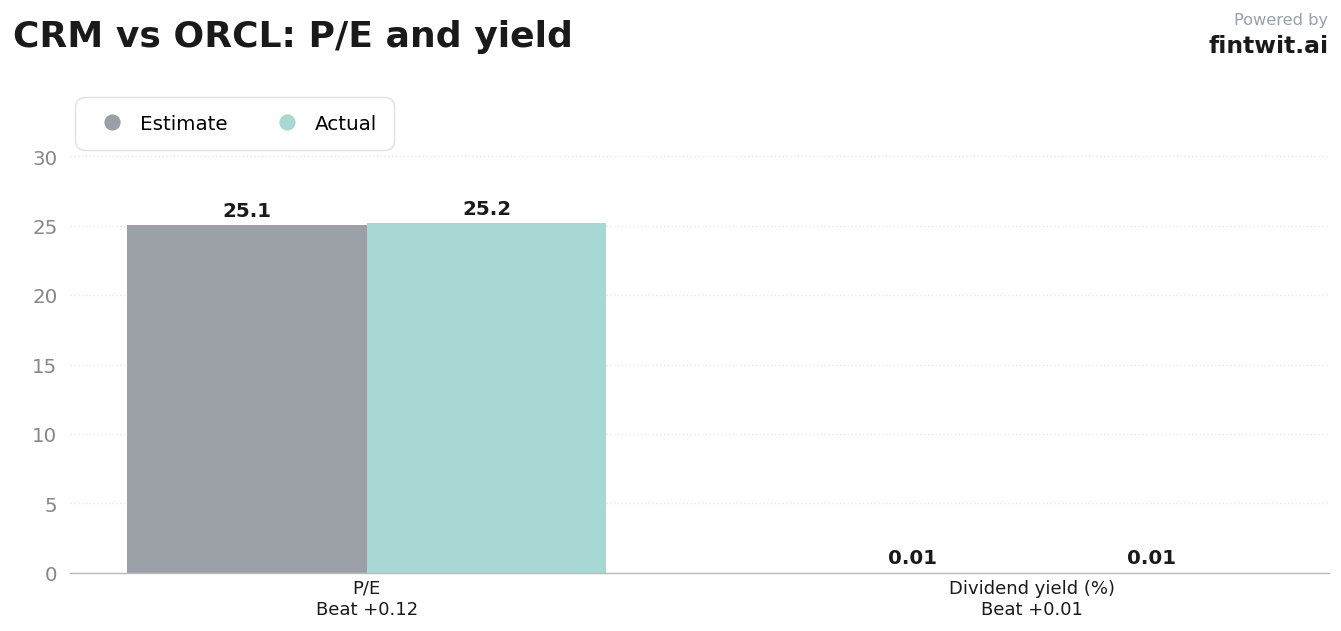
The financial profiles of these two companies highlight the trade-off between Salesforce's operational efficiency and Oracle's aggressive growth spending. Salesforce maintains a P/E ratio of 25.05, while Oracle trades at a similar 25.17, despite vastly different capital requirements.
Investors should note the divergence in recent performance, with Salesforce up 6.01% over the last 90 days, while Oracle has faced a 24.97% decline in the same period. The following data highlights the key valuation and performance metrics for both firms.
- Salesforce revenue growth: 13.3% YoY (Q1 FY27).
- Oracle revenue growth: 21% YoY (Q4 FY26).
- Salesforce 1-year return: -19.86%.
- Oracle 1-year return: -41.20%.
- Salesforce dividend yield: 0.85%.
- Oracle dividend yield: 1.39%.
Bull and bear on each
The bull case for Salesforce rests on its ability to drive high-margin recurring revenue through Agentforce, while the bear case centers on the risk of seat erosion. Oracle's bull case is anchored by its 93% growth in IaaS, though bears point to the massive debt and dilution risks associated with its $50 billion infrastructure fundraising.
Analyst sentiment remains split, reflecting the uncertainty surrounding AI monetization timelines for both companies.
- CRM Bull: $50B share repurchase program provides significant EPS support.
- CRM Bear: Consumption-based revenue models may fail to offset seat losses.
- ORCL Bull: $638B in Remaining Performance Obligations (RPO) provides long-term visibility.
- ORCL Bear: High customer concentration with entities like OpenAI creates revenue volatility.
- CRM Analyst Consensus: Buy with an average target of $249.51.
- ORCL Analyst Consensus: Neutral with an average target of $263.97.
The verdict
Salesforce offers a more balanced profile of profitable growth and shareholder-friendly capital allocation. Its focus on software-layer AI integration avoids the heavy capital intensity that currently weighs on Oracle's balance sheet.
Oracle remains a high-beta play on the success of its AI infrastructure investments. Success depends on whether it can maintain its 20%+ revenue growth rate while transitioning to self-funding cash flow.