Is The Allstate Corporation (ALL) Undervalued? A Valuation Analysis
Allstate (ALL) trades at a 5.4x P/E ratio, significantly below its insurance peers. We analyze the valuation, bull/bear cases, and the latest analyst outlooks.

The headline number
Allstate currently trades at $241.38 with a market capitalization of $53.37 billion. The company's P/E ratio of 5.4x stands as a primary indicator of its current market valuation.
The stock has returned 15.44% over the last 180 days. This performance reflects investor confidence in the company's ongoing operational improvements.
- Dividend yield: 1.96%
- LTM Return on Equity: 48%
- Annual free cash flow generation: >$3.5 billion
- Share repurchase program capacity: $3.6 billion
Peer comparison
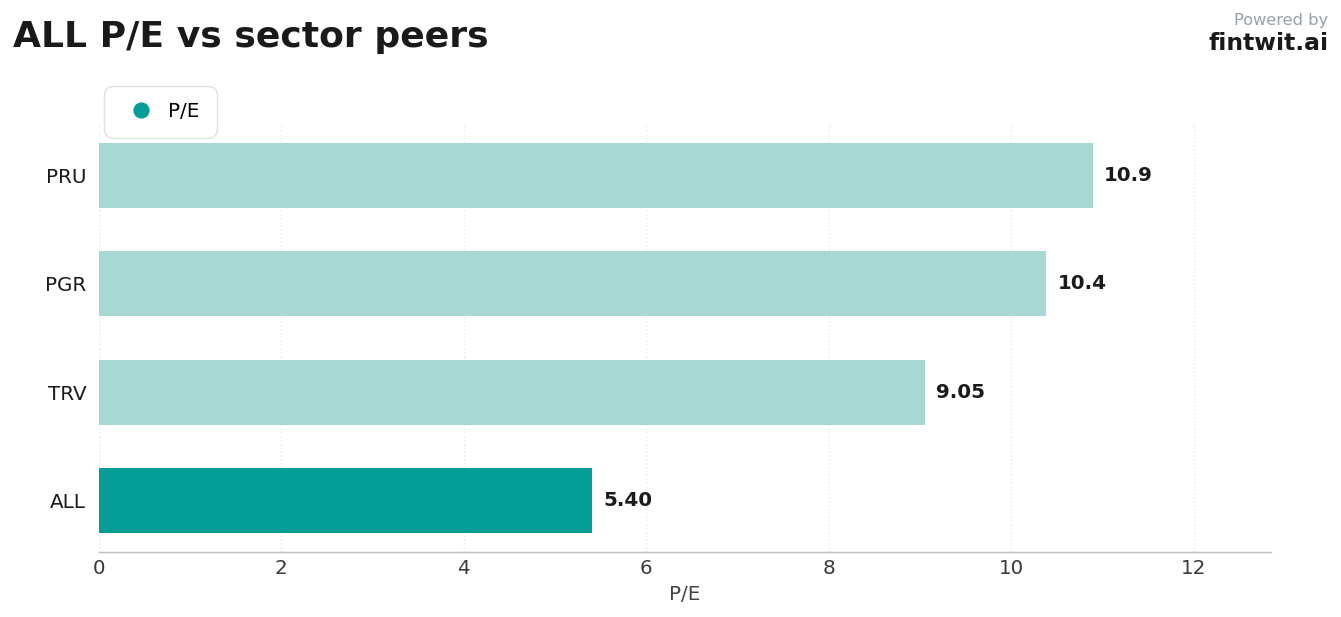
Allstate's valuation metrics are notably lower than those of its primary competitors in the property and casualty insurance space. This discrepancy highlights the potential for multiple expansion if the company continues to execute its growth initiatives.
The following table compares Allstate's P/E ratio against key industry peers.
- Allstate (ALL): 5.4x P/E
- Progressive (PGR): 10.38x P/E
- Travelers (TRV): 9.05x P/E
- Prudential (PRU): 10.89x P/E
Bull vs bear
The investment thesis for Allstate hinges on its ability to maintain underwriting discipline while growing market share. Analysts remain divided on the sustainability of these margins given the volatile nature of catastrophe losses.
The bull case emphasizes capital efficiency and the success of the Transformative Growth initiative. Conversely, the bear case focuses on the risks associated with policy disclosure changes and inflationary pressures.
- Bull: Exceptional capital efficiency with LTM ROE exceeding 48%.
- Bull: Strong free cash flow supports aggressive capital returns.
- Bear: Earnings volatility driven by unpredictable catastrophe losses.
- Bear: Reduced transparency following the decision to halt monthly policy disclosures.
- Bear: Regulatory and competitive pressures limiting rate increases.
Fintwit's AI verdict
Market sentiment surrounding the stock remains focused on the company's ability to navigate inflationary repair costs and regulatory hurdles. The current valuation suggests that the market has priced in significant risk, potentially overlooking the underlying improvements in the combined ratio.
The firm's strategic pivot toward sophisticated analytics and proactive capital management provides a framework for long-term value creation. Investors are watching for consistent margin expansion to justify a higher valuation multiple.