GLP-1 Obesity Drug Market Outlook: LLY, NVO, and the $190B Opportunity
GLP-1 therapies are shifting from niche diabetes treatments to foundational metabolic health tools. Here is the outlook for the sector.

The thesis
The global GLP-1 market is currently experiencing a seismic shift in patient adoption and clinical application. Analysts at Morgan Stanley, led by Terence Flynn, highlight that the category is reaching a critical inflection point driven by the introduction of oral formulations and broader insurance coverage.
This transition is moving beyond simple weight loss into the treatment of broader metabolic conditions. The expansion of the addressable patient population is expected to sustain high double-digit growth rates for the leading incumbents through the end of the decade.
Why now
The primary catalyst for current market momentum is the shift toward oral delivery mechanisms, which significantly lowers the barrier to patient adherence compared to traditional injectable therapies. This evolution is expected to increase market penetration among patients who are currently resistant to needle-based treatments.
Furthermore, the expansion of Medicare access in the United States is removing a significant financial hurdle for the aging population. This policy shift is expected to accelerate revenue growth for established players like Eli Lilly and Novo Nordisk as coverage mandates become more standardized.
Stocks we're watching
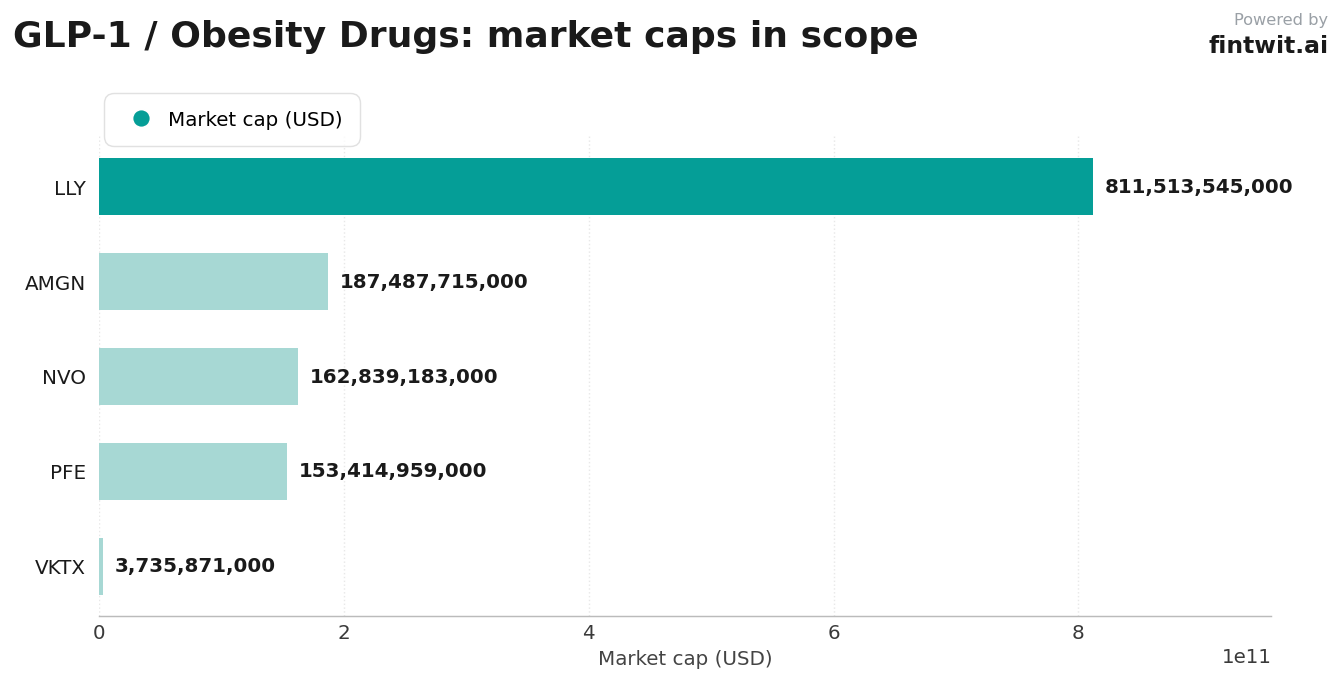
The competitive landscape is bifurcated between established incumbents with massive manufacturing scale and agile biotech challengers seeking to disrupt the market with next-generation candidates. Market capitalization remains concentrated at the top, but smaller players are seeing increased valuation premiums based on clinical trial data readouts.
Investors should monitor the following companies as they navigate the evolving regulatory and competitive environment:
- Eli Lilly (LLY): The market leader leveraging its Zepbound franchise and the oral candidate Foundayo to maintain its dominant share of the obesity space.
- Novo Nordisk (NVO): The pioneer and primary incumbent utilizing its Wegovy franchise and new oral pill to defend its market position against aggressive competition.
- Viking Therapeutics (VKTX): A high-growth challenger with promising clinical data for its VK2735 candidate, positioning it as a potential disruptor in the next-gen space.
- Amgen (AMGN): A diversified contender developing MariTide, a differentiated long-acting GIP/GLP-1 candidate aimed at carving out a unique niche in the competitive landscape.
- Pfizer (PFE): A late-stage entrant leveraging its scale and recent acquisitions to develop a competitive oral GLP-1 pipeline targeting a 2028 market launch.
Risks that break it
The rapid growth of the GLP-1 sector is not without significant headwinds that could compress margins or limit total addressable market expansion. Investors must weigh the potential for long-term safety concerns against the current clinical efficacy data.
Regulatory and fiscal pressures are also mounting as government entities look to manage the high cost of these therapies.
- Long-term safety and efficacy uncertainties, including potential side effects on organ systems and the psychological impact of chronic, lifelong treatment.
- High out-of-pocket costs and restrictive insurance coverage, which may limit patient access and create significant fiscal pressure on government budgets.
- Intensifying competition and patent cliffs, as new oral entrants and generics threaten to disrupt current revenue streams and compress margins.