Costco Wholesale Corp (COST) vs Target Corporation (TGT): Which Is the Better Buy?
Costco and Target represent two distinct retail strategies. We break down the financials to see which stock offers the best risk-adjusted return.
The matchup
Costco operates on a high-volume, low-margin model anchored by a 92.2% membership renewal rate in the U.S. and Canada. This creates an annuity-like revenue stream that insulates the firm from the cyclical volatility typical of the retail sector.
Target utilizes an omnichannel 'stores-as-hubs' strategy, leveraging its physical footprint to fulfill digital orders. The company is currently focused on recovering margins through supply chain productivity and high-margin advertising revenue via its Roundel platform.
- Costco revenue growth reached 11.6% YoY in Q3 FY2026.
- Target revenue growth stood at 6.7% YoY in Q1 FY2026.
- Costco maintains a significant moat through Kirkland Signature private label exclusivity.
- Target relies on strategic partnerships with brands like Ulta and Disney to drive store traffic.
Numbers side by side
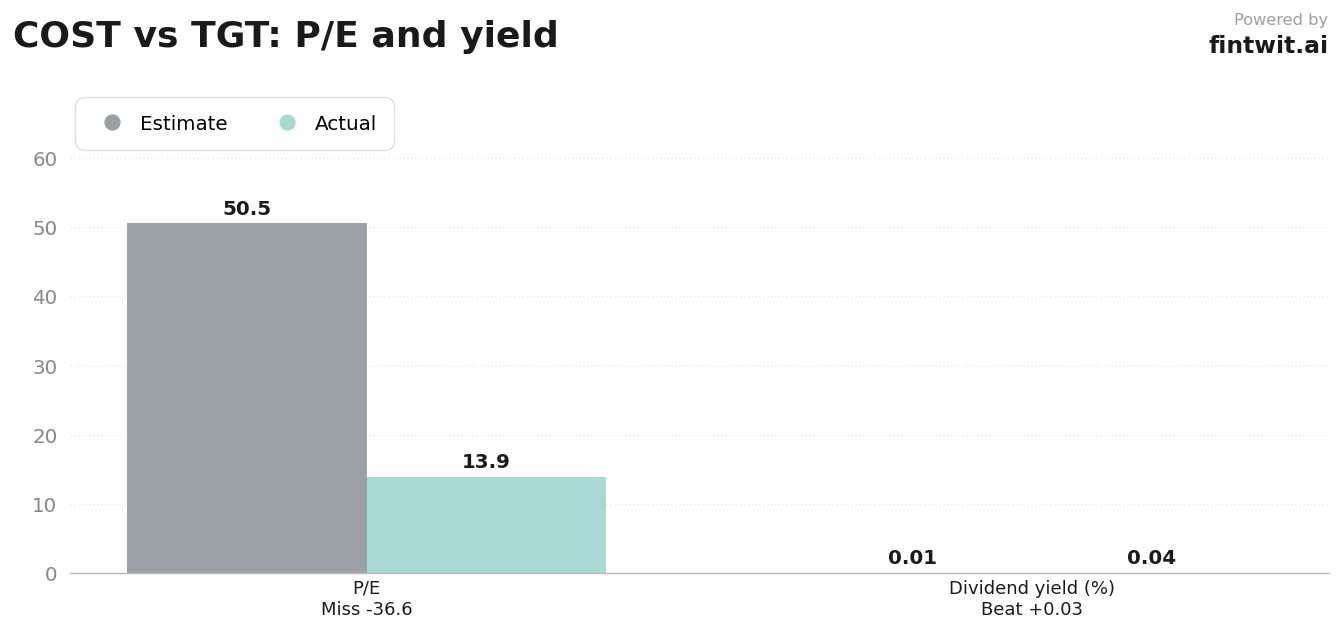
Valuation metrics highlight the premium investors pay for Costco's business model stability compared to Target's turnaround play. Costco trades at a significantly higher multiple, reflecting market confidence in its long-term growth trajectory.
The following metrics illustrate the current financial standing of both retailers as of the most recent reporting periods.
- Market Cap: Costco $431.59B vs Target $51.29B.
- P/E Ratio: Costco 50.51x vs Target 13.93x.
- Dividend Yield: Costco 0.53% vs Target 3.95%.
- 1-Year Price Performance: Costco -4.14% vs Target +43.00%.
- 90-Day Price Performance: Costco -3.82% vs Target +19.29%.
Bull and bear on each
Investment theses for both companies hinge on their ability to manage inflationary pressures and consumer spending shifts. Analysts remain divided on whether Costco's premium valuation is sustainable or if Target's margin recovery provides more upside.
The following points summarize the primary bull and bear cases for each ticker.
- COST Bull: Consistent membership fee growth provides a reliable revenue base.
- COST Bull: Pricing authority allows for market share gains during inflationary periods.
- COST Bear: High valuation leaves little room for execution errors.
- COST Bear: Potential tariff exposure on non-food imports threatens margins.
- TGT Bull: Successful turnaround strategy with return to positive comparable sales.
- TGT Bull: Growth in high-margin advertising revenue improves profitability.
- TGT Bear: High exposure to discretionary general merchandise increases vulnerability.
- TGT Bear: Significant tariff risk due to high import reliance from China.
The verdict
Costco remains the preferred choice for investors seeking business model durability and consistent membership-driven growth. Its ability to maintain pricing power in a competitive retail environment justifies its premium valuation relative to the broader sector.
Target offers a compelling case for those seeking potential multiple expansion through a successful operational turnaround. The company's pivot to high-margin revenue streams could surprise the market if execution remains disciplined throughout the fiscal year.